People / Max Hayward

Max Hayward is a multidisciplinary designer who is passionate about art, architecture, design and the environment. His work is playful and contemporary. He is curious and creative in his approach, starting in his sketch book and finalising in the workshop. He works with a range of materials and processes. Currently he is focused on timber design and construction. He is passionate about working with wood given its ecological benefits, its flexibility and material properties. He is currently studying for a Master’s Degree in Advanced Ecological Buildings & Biocities at the Institute for Advanced Architecture of Catalonia (IAAC).
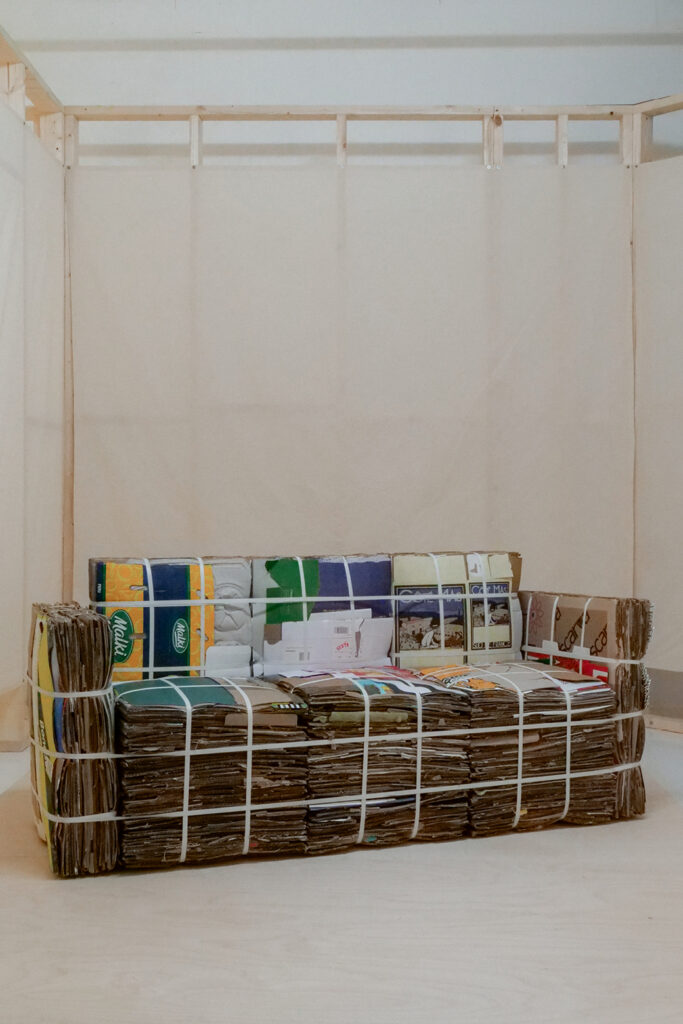
Baler Sofa
The ‘Baler Sofa’ is a unique response to the costly and finite nature of resources. The sofa is made from cardboard, an abundant and easily recyclable material, used here to form a unique, temporary, low-cost piece of furniture. Cardboard bales, often seen at the back of supermarkets, are an efficient way of storing cardboard compactly before recycling. The Baler Sofa represents an extension of this process – bale sizes are designed, dimensioned and assembled to form the sofa with the graphics telling the story of the cardboard’s past life. The initial design was a stool, which has since been joined by additional pieces, including 20 seats for a festival in Girona, Catalonia, earlier this year, which were all recycled after use.
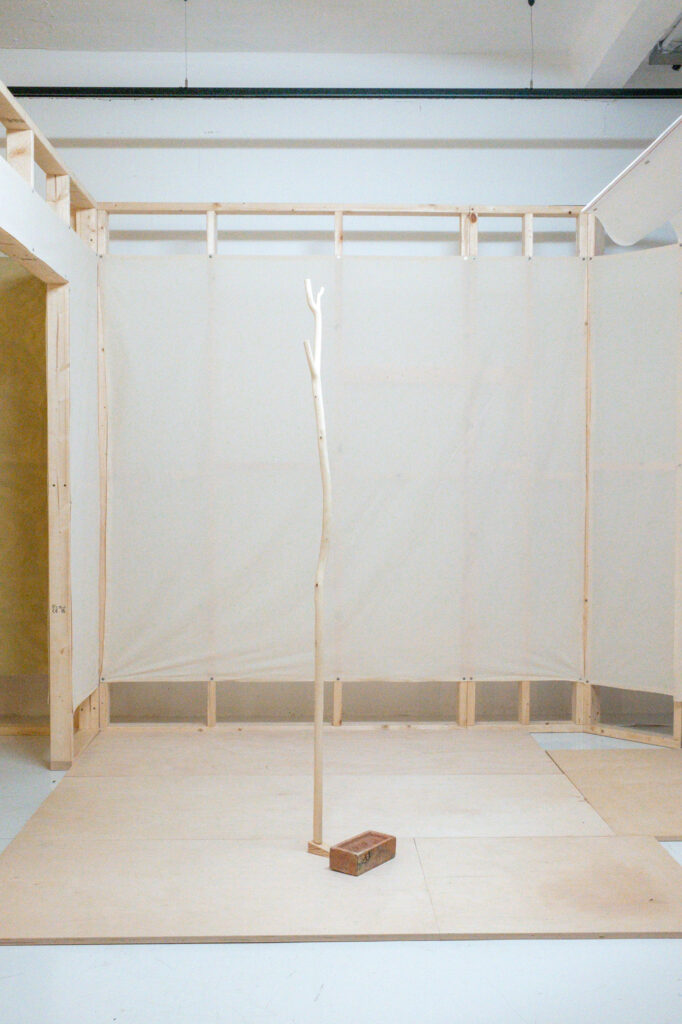
Bobbin Hooks
Following my BA at Kingston University,
I worked full time for a London design studio. Whilst the work was enjoyable, the hours involved left little time for my own practice. Furthermore, given rental prices, I did not have sufficient resources to rent a studio and pay for materials. I explored many options, including residences and courses and was fortunate to be accepted onto a 3-month, fully funded course, working with UK timber, allowing me to further develop my practice.
The ‘Bobbin Hooks’ were developed on this course. These unique structures, made from UK-grown coppiced hazel, bring character to the home and function as both a doorstop and a coat hook. Coppiced hazel has a number of limitations in design, with unique structures and small diameters. The hooks represent a novel way of using this UK-grown resource: each individual Bobbin Hook celebrates the unique character of the individually harvested coppiced rods.
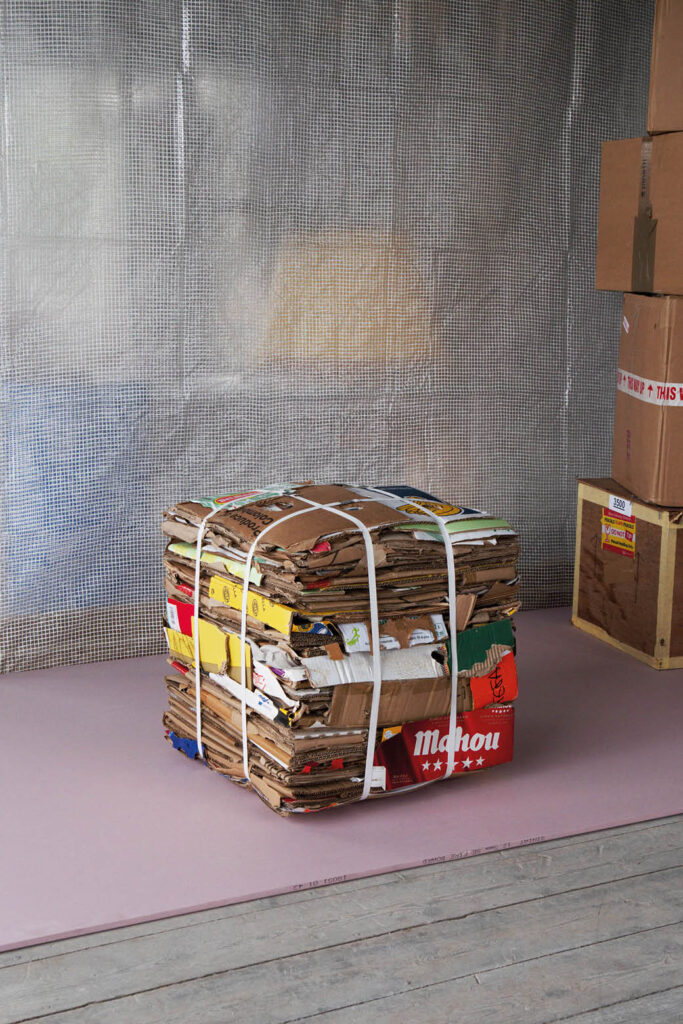
A Seat at the Table: Chair 20
A cardboard bale is not an unfamiliar object, however in furniture it is. This piece challenges fast, mass produced furniture and is a direct response to the given brief. This stool repurposes cardboard boxes, like those transported by Luton Vans, transforming them into unique, low-cost furniture, with graphics telling the story of its past use.