People / Jake Robertson

Jake Robertson is a furniture designer and maker based in South London. Working with offcuts and odd bits, Jake’s hands-on approach explores our affection towards objects and the character arising from their imperfection.
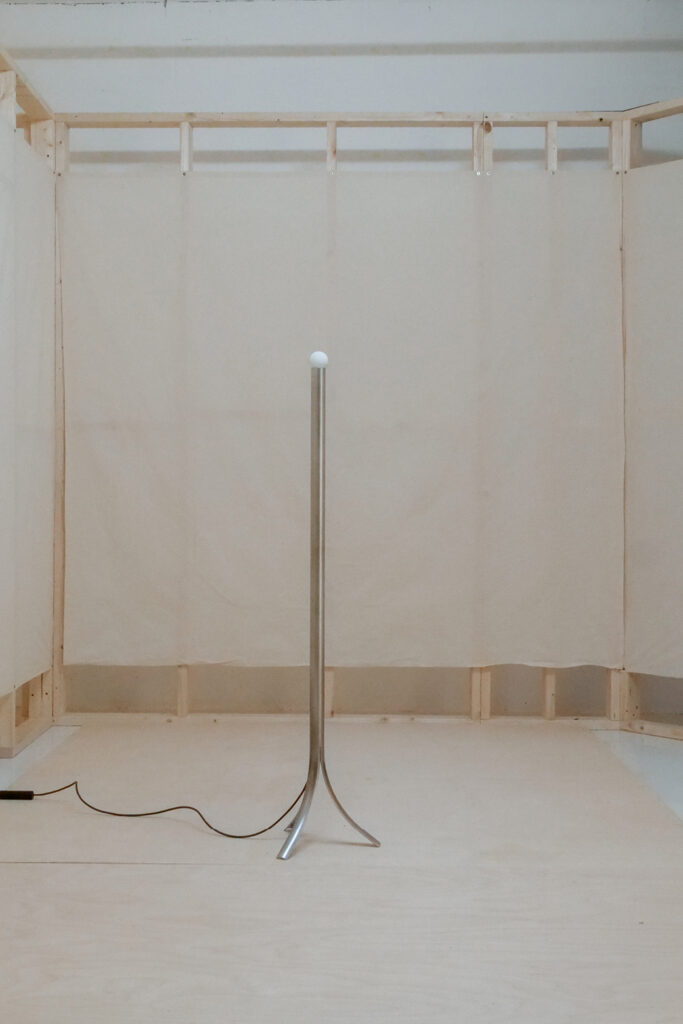
Tall Split Lamp
The aluminium tube is a widely accessible material, it’s easy to work with and most importantly very cheap. To avoid outsourcing specialist processes such as welding, which I can’t do or afford, I have to look at inexpensive processes that I can do in-house. I can cut, drill, and sand aluminium with the tools I have access to, and with thin enough material I can also bend. So to achieve a floor lamp design I looked at cutting and then bending the aluminium tube like a peeling a banana, to form three feet. All that was left was to insert electrical components. Three cuts, three bends, one hole, some sanding and you get a floor lamp. This is a familiar attitude I follow within my practice; transforming inexpensive materials into useful objects with the limited tools and resources I have access to.
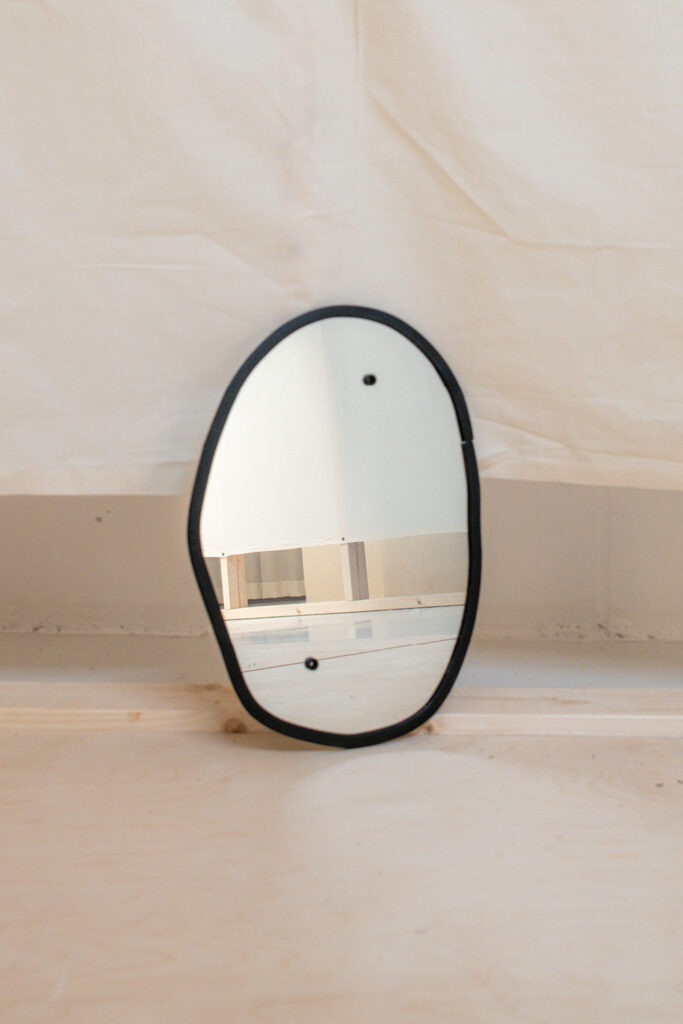
Broken Mirror
I try to be as resourceful as I can when designing a new object. It is most often the material that informs the design outcome and so working within the limitations of an off-cut offers unconventional outcomes. When working with large sheets of mirror in my own practice and whilst working for other studios, I have ended up with broken and off-cut pieces that are difficult to dispose of. Because the material is misshapen and irregular, a flexible frame that could be cut to size was needed. The edge trim for windows and car parts was suitable for covering up the sharp edges of the mirror, and grommets used to soften the contact between the screw and glass. This project was limited by both the form of the off-cuts as well as cost, by finding a readily available trim, the final outcome required little tooling to produce.

High Stool with Backrest
Sapele, aluminium, stainless steel bolts
495 x 410mm x 860mm
Sapele seat and backrest are fixed to the aluminium body with bolts through handmade saddle-washers and threaded dome caps.

Record Dividers
Aluminium sheet, rivets, plastic card
314 x 333 x 5mm
The flared profile allows labels to be wedged between the two aluminium sheets.